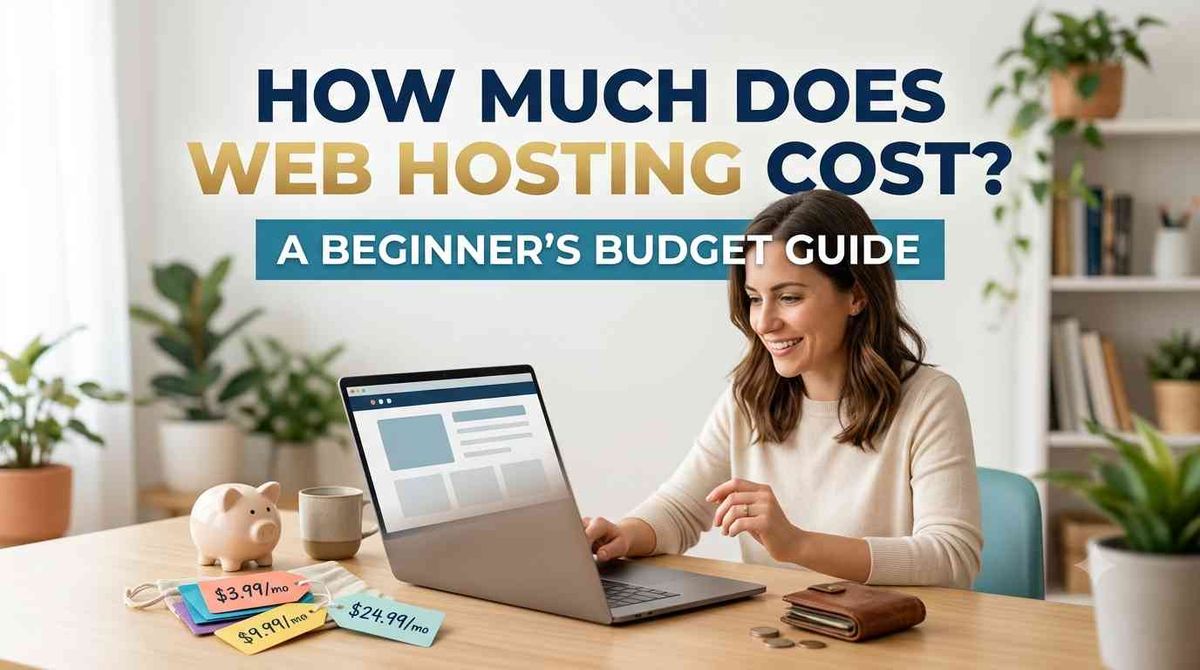
How Much Does Web Hosting Cost? A Beginner’s Budget Guide
Understand web hosting costs before you buy. Learn about introductory offers, renewal rates, domains, SSL, backups and how to budget for your website.

Starting a website does not have to be expensive. However, the advertised hosting price is only one part of your budget. Domain renewals, taxes, email, backups and the renewal rate can all affect what you pay over time.
If you are launching a WordPress blog, portfolio or small business website, this guide will help you estimate your hosting costs and avoid paying for features you do not need.
Before choosing a plan, see our guide to choosing WordPress hosting to understand the features and resources your website needs.
Quick Answer: How Much Should You Budget?
For a small website in India, a sensible starting budget is around ₹2,000–₹6,000 per year for basic hosting, with additional room for domain registration and optional services. Your actual cost depends on the provider, billing term and features included.
| Website type | Budget to consider |
|---|---|
| Personal blog or portfolio | ₹2,000–₹4,000/year |
| Small WordPress website | ₹3,000–₹7,000/year |
| Business website with multiple features | ₹5,000–₹12,000+/year |
| Growing website needing more resources | Depends on the hosting upgrade |
These are planning estimates, not guaranteed market prices. They exclude some possible extras, and renewal costs may be higher.
If you're comparing specific providers, see our Hostinger vs GreenGeeks vs Bluehost vs Serverbyt comparison to evaluate their hosting options side by side.
1. What Determines Your Hosting Cost?
Type of hosting
Shared hosting is usually the most affordable starting point because multiple websites share server resources. It is suitable for many blogs and small business websites.
Cloud hosting and VPS hosting offer different resource allocations and levels of control, but generally cost more. You do not necessarily need them just because you are starting a website.
Billing period
Providers often advertise their lowest monthly equivalent price when you pay for several years upfront. A plan advertised at ₹100 per month might require a much larger payment at checkout.
Before buying, check:
- The total amount payable today.
- The minimum commitment period.
- The renewal rate and renewal term.
- Whether taxes are included.
Number of websites
A single-site plan can be economical if you only need one website. If you plan to manage several websites, compare the cost of a multi-site plan against purchasing separate hosting accounts.
Do not pay for unlimited websites or additional resources unless you expect to use them.
2. Compare Hosting Prices Before You Buy
The following examples illustrate why the first-term price and renewal price both matter. Prices are taken from the providers’ published pricing pages and can change.
| Provider and example plan | Advertised introductory price | Published renewal price |
|---|---|---|
| Hostinger Single | ₹69/month | ₹289/month |
| Bluehost Starter | ₹199/month | ₹349/month |
| GreenGeeks Lite | $2.95/month | $13.95/month |
Hostinger's example requires a 48-month commitment, Bluehost's requires a 36-month term, and GreenGeeks' listed introductory price is prepaid for 12 months. Taxes and checkout terms may vary.
Sources: Hostinger pricing, Bluehost India pricing, and GreenGeeks pricing.The important lesson: do not compare monthly prices without comparing the upfront payment, billing period and renewal cost. These plans also differ in their included features, so price alone does not establish which one is best.
For a closer look at the providers, read our reviews of Hostinger, Bluehost and GreenGeeks.
3. Do Not Forget These Additional Costs
Hosting is not always your website's only expense.
Domain name: Some hosting offers include a domain for the first year. Check its renewal price and whether the offer applies to your preferred domain extension.
SSL certificate: Many hosting plans include basic SSL. Confirm that HTTPS is included before paying for a separate certificate.
Business email: Check whether professional email addresses are included, how long they remain free, and what renewal charges apply.
Backups: Understand how frequently backups run, how long they are retained and whether restoring a backup costs extra. Keep an independent backup of important website data where practical.
Premium themes and plugins: WordPress can be started with free themes and plugins. Paid tools are optional unless your website needs specific functionality.
Taxes and currency conversion: Check the final checkout amount. International providers may quote prices in a foreign currency, and your payment provider may apply conversion charges.
You do not need to buy every add-on at checkout. First identify what your website actually requires.
4. Calculate Your Real Hosting Budget
Use this simple formula:
Total cost = hosting payment + domain costs + paid email or add-ons + applicable taxes.
For a longer-term budget, calculate the first billing term separately from subsequent renewals.
For example, Hostinger's published India pricing lists its Single plan at ₹3,312 upfront for 48 months, followed by renewal at ₹289 per month. At that published renewal rate, hosting alone would cost ₹3,468 for 12 months after renewal, before any applicable extras or changes in pricing.
That is why a low introductory price should not be treated as your permanent website budget.
5. Which Hosting Plan Should You Choose?
Your best option depends on what you are building.
- For one new blog: Start by comparing entry-level shared hosting plans. Prioritise backups, SSL, support and the renewal price.
- For multiple small websites: Compare multi-site plans, but check resource limits and terms of service.
- For a business website: Consider the importance of support, recovery options and the cost of downtime—not just the cheapest plan.
- For a growing website: Upgrade when your traffic, resource use or technical requirements justify it.
If you are considering Hostinger in India, the code 1SADIQUE20 is associated with an advertised discount. For Serverbyt's India Blaze offer, check whether 999deal remains applicable. Discount availability and eligibility can change.
6. Is Cheap Web Hosting Worth It?
Cheap hosting can be a sensible choice for a new website, provided it meets your requirements. The problem is not a low price; it is buying a plan without understanding its limitations or renewal terms.
Before paying, ask yourself:
- Can this plan host the number of websites I need?
- Is SSL included?
- Are backups and restoration adequate?
- What will I pay when the introductory term ends?
- Can I upgrade if my website grows?
- Does the provider offer support suitable for my technical experience?
If you are still comparing providers, read our web hosting reviews at BeingOptimist.
Frequently Asked Questions
Can I start a website with a small budget?
Yes. A basic blog or portfolio can often start with an entry-level shared hosting plan and a domain. Use free themes and plugins where they meet your needs.
Why is hosting renewal more expensive?
Providers may offer introductory discounts for new customers or longer billing commitments. Once that period ends, the standard renewal rate may apply.
Is free web hosting a good idea?
It can work for experimentation or a temporary project. For a website intended to build a brand, attract customers or earn revenue, compare its limitations with a paid plan before committing.
Should I buy a multi-year hosting plan?
A longer plan can reduce the advertised monthly equivalent price, but it requires more money upfront. Choose one only if you are comfortable with the commitment and have checked the renewal terms.
Do I need cloud hosting when starting a blog?
Usually not. Shared hosting is a reasonable starting point for many new blogs. Consider cloud hosting or a VPS when your actual resource requirements justify the additional cost.
Final Verdict
The cheapest advertised hosting plan is not automatically the best value. Compare the total upfront payment, renewal rate, included features and likely additional costs before buying.
For most beginners, the practical approach is to start with a suitable shared hosting plan, avoid unnecessary add-ons and review the budget again as the website grows.
New to website hosting? Our beginner's guide to web hosting explains what to prioritise when choosing your first plan.
Disclosure: This article contains affiliate links. StackPulse may earn a commission from qualifying purchases. Prices and offers can change; confirm current terms on the provider's website before purchasing.